
How to Clean and Maintain High-Gloss Acrylic Surfaces: A Practical Care Guide

High-gloss surfaces have this annoying habit of showing every mistake you make on them. Wrong cloth, wrong cleaner, even wiping in circles instead of one direction- it all leaves marks that weren’t there before. So if you’ve just had decorative acrylic sheets installed, or you’re standing in front of a smudged shutter right now trying to figure out what’s actually safe to use, this is for you.
Learning how to properly clean acrylic sheets is not very difficult. The key point is to unlearn a few habits you picked up when cleaning glass or laminate – habits which can take the shine off a glossy finish a lot quicker than everyday use.
How Do You Clean High-Gloss Acrylic Sheets?

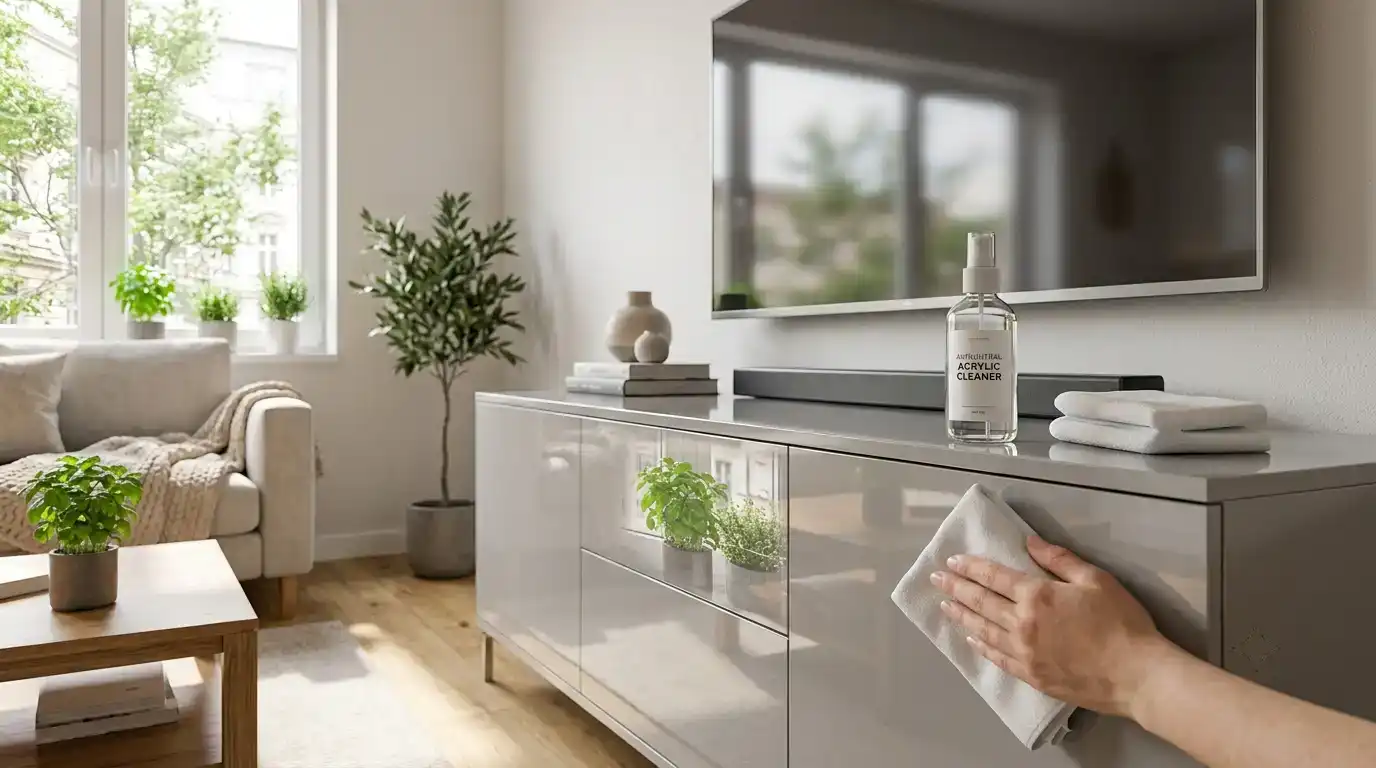
Keep it simple. Soft microfiber cloth and a little water; wipe gently with consistent strokes to minimise visible streaking. For anything beyond dust, mix a small amount of mild, non-abrasive soap into water, and that’ll handle most of what you’re dealing with: fingerprints, a bit of grease near the hob, general buildup.
Then dry it with a second cloth. Drying with a second microfiber cloth helps prevent water spots on high-gloss finishes. Water spots show up far more on gloss than they ever would on matte, and it’s a five-second step that saves you the annoyance later. Do this regularly, and the surface stays looking close to how it did on day one.
Which Cleaning Products Are Safe for Acrylic Surfaces?
Honestly, mild and pH-neutral is really all you need. Diluted dish soap does the job for most acrylic surfaces, gloss included. If you’d rather buy something purpose-made, there are acrylic-safe or plastic-safe sprays out there that skip the harsher solvents you’ll find in general household cleaners. The rule of thumb is basically this: gentle enough not to touch the sheen, strong enough to actually cut through grease.
Can Acrylic Sheets Be Cleaned With Glass Cleaner?
This is the one people get wrong most often. Many conventional glass cleaners contain ammonia or other chemicals that may not be suitable for acrylic surfaces. Ammonia is rough on acrylic, dulls it with repeated use, and in some cases can cause fine surface cracking (crazing is the technical term, if you’re curious). Certain chemicals, including ammonia-based cleaners, may contribute to surface dulling or stress crazing over time, particularly on stressed acrylic panels.
Acrylic just isn’t glass, even if a high-gloss finish tricks the eye into thinking it is. So resist grabbing the same bottle you’d use on a window. If the label doesn’t say it’s safe for acrylic or plastic, don’t risk it.
How Do You Remove Fingerprints From Acrylic Sheets?
Fingerprints on gloss are mostly just light oil residue, so the same mild soap-and-water routine usually sorts them out. Just focus a bit more on the actual mark instead of doing a full wipe-down for one print.
For stubborn marks, use a cleaner specifically recommended for acrylic surfaces. If using isopropyl alcohol, always follow the manufacturer’s guidance and test it on an inconspicuous area first.
Worth testing on a hidden section first if it’s your first time using it on that particular surface, just to be safe. Wipe one direction, then buff dry; the buffing is what actually brings back the shine, not the wiping itself.
What Should Never Be Used on Acrylic Surfaces?
A short but important list: ammonia-based cleaners, abrasive scrubbers, acetone or nail polish remover, anything with bleach. All of these can scratch, cloud, or chemically damage the surface. Sometimes you’ll see it right away; sometimes it’s a slow dulling you only notice months down the line and can’t quite place.
Paper towels too, even though they seem harmless enough. Paper towels can leave fine surface marks over time, particularly on high-gloss acrylic, making microfiber cloths the safer choice. Stick to microfiber. It’s a small habit that makes a real difference.
Bringing It Together: A Practical Care Routine
Once decorative acrylic sheets are actually installed, the maintenance routine matters more than most people expect going in. It’s really what decides whether the surface still looks premium five years later or starts looking tired within one year.
For high-gloss specifically, it’s following the recommended care routine for Dexarte’s Dexiglas Crystal. In particular, its reflective finish shows fingerprints and water spots more than most, so regular microfiber wiping is what keeps that mirror-like look intact.
For broader decorative use, cabinets, furniture, and bathroom panels, Essenczza comes in Matte, Metallic, Sparkle, and a handful of other finishes, and the same no-ammonia, mild-cleaner rule holds no matter which one you’ve picked.
And for higher-traffic areas that need cleaning often without wearing thin, Imparo is designed for demanding, high-use environments that are meant to take that kind of regular use.
Conclusion
Cleaning acrylic sheets isn’t really about hunting down some miracle product. It’s mostly about avoiding the handful of things that do the damage: ammonia, abrasives, harsh solvents and sticking to a simple microfiber-and-mild-soap routine the rest of the time.
Do that consistently, and high-gloss acrylic sheets keep their shine, decorative finishes stay unmarked, and you sidestep the slow dulling that comes from reaching for the wrong cleaner out of habit.
Need Help Picking The Right Finish?
Each space has a function, and the right finish can completely change the look, feel and performance of that space over time. When designing a kitchen, wardrobe or feature wall, the best choice is to match the finish to the space, not just follow trends.
Contact Dexarte for expert advice, design inspiration and finish recommendations to help you create the right mood, function and visual harmony on every surface.
Follow Dexarte on Instagram, Facebook, and LinkedIn for inspiration and surface innovations.
FAQ
Q1. How do you clean high-gloss acrylic sheets?
A. A soft microfiber cloth with mild soap and water was wiped gently with a clean microfiber cloth before drying with a second cloth, then dried with a second cloth to avoid water spots.
Q2. Which cleaning products are safe for acrylic surfaces?
A. Mild, pH-neutral cleaners, diluted dish soap or a dedicated acrylic-safe spray work best without touching the finish.
Q3. Can acrylic sheets be cleaned with glass cleaner?
A. Better to avoid it. Many conventional glass cleaners contain ammonia or other ingredients that may not be suitable for acrylic surfaces, which can dull acrylic over time or cause fine surface cracking.
Q4. How do you remove fingerprints from acrylic sheets?
A. Mild soap and water remove most fingerprints. For stubborn marks, use a cleaner specifically recommended for acrylic surfaces and always test it on a hidden area first.
Q5. What should never be used on acrylic surfaces?
A. Ammonia-based cleaners, abrasive scrubbers, acetone, nail polish remover, bleach, and even paper towels all of them can scratch or dull the finish over time.