
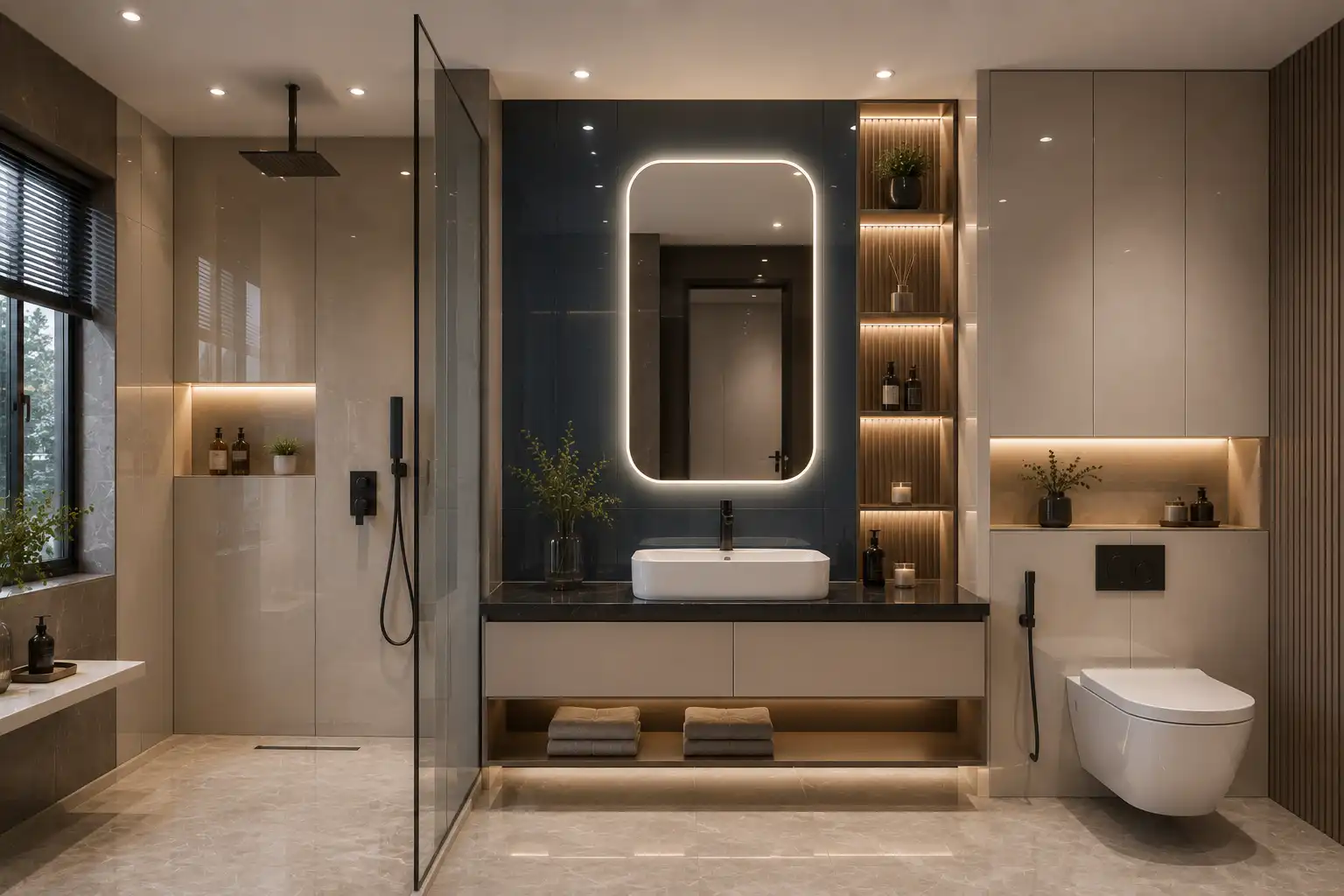
Acrylic Sheets for Bathrooms: Wall Cladding, Vanity Units and What You Need to Know

Bathrooms are the one room where a wrong material choice doesn’t stay hidden for long; moisture finds every weak point eventually. That’s usually what sends people looking into acrylic sheets for bathrooms in the first place: something that handles constant humidity without the grout lines, regrouting, and mould growth that can develop in poorly maintained grout lines over time.
This guide covers where acrylic actually earns its place in wall cladding, shower surrounds, vanity units and where it doesn’t, so you’re not guessing based on a showroom sample that’s never seen real steam.
Can Acrylic Sheets Be Used in Bathrooms?
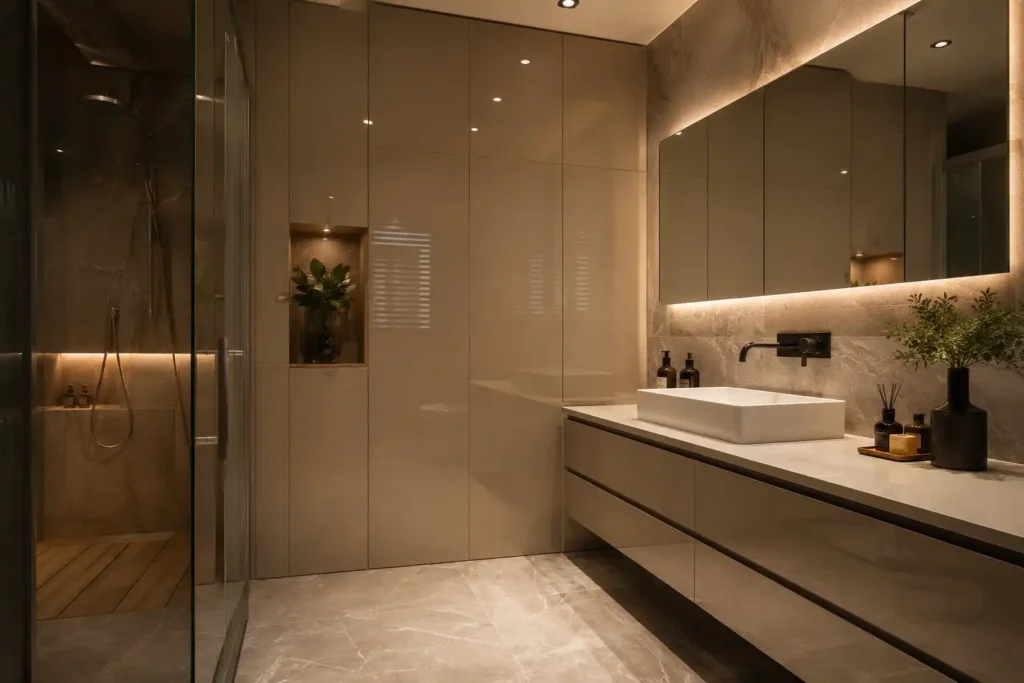
Yes, and it’s become one of the more common alternatives to tiling for exactly the reasons people get frustrated with tiles: no grout lines to scrub, no grout to discolour, and a genuinely seamless surface across a wall.
Acrylic sheets used for bathrooms are typically installed as large panels rather than small tiles, which means fewer joints for moisture to work its way behind. That said, not every acrylic sheet is built the same way; thickness and finish matter more here than in a living room or bedroom, since the panel is dealing with humidity every single day, not occasionally.
Are Acrylic Sheets Waterproof?
Largely, yes, acrylic has very low water absorption, making it well suited to humid environments, which is the core reason it works in bathrooms at all. But “waterproof” and “installed correctly” are two different things.
The panel can be fully water-resistant and still fail at the edges if the joints and seams around it aren’t sealed properly during installation.
So the honest answer is: Acrylic sheets themselves are highly water-resistant, but the overall installation is only as water-tight as its joints, sealants, and fixing system.
Are Acrylic Sheets Suitable for Shower Walls?
Yes, though this is where thickness and durability actually matter more than in most other parts of the bathroom.
Shower walls take constant direct water contact, temperature swings from hot water and steam, and regular contact from towels, bottles, and hands, so a lighter-duty acrylic sheet meant for a dry wall panel isn’t necessarily the right pick here.
A performance-grade acrylic built for high-moisture, high-traffic use holds up noticeably better over years of daily showers than a decorative-only sheet would.
Can Acrylic Sheets Be Used for Bathroom Vanity Units?
Yes, and this is actually one of the more popular applications, since vanity fronts and cabinet doors deal with splashes and humidity but not the constant direct water exposure a shower wall does.
Acrylic vanity panels are clean and are either high-gloss or matte finished, and they eliminate some of the moisture concerns associated with wood vanity fronts that are not properly sealed around sinks. They’re also easy to wipe down after toothpaste splatters, soap buildup, or makeup spills, which makes them a great everyday choice.
How Do Acrylic Sheets Compare to Bathroom Tiles?
This is really the decision most people are trying to make.
Tiles have decades of track record and plenty of design variety, but grout is the recurring weak point; it discolours, it can trap mould, and it needs periodic resealing to stay hygienic. Installation also takes longer and gets messier, especially in a small bathroom.
Acrylic sheets install faster, cover larger areas with far fewer seams, and skip the grout problem entirely, which is usually the single biggest reason people switch. What you’re trading is the tile market’s sheer range of textures and mosaic-style detailing; acrylic finishes are broad but not infinite the way tile options are.
For a full wet-area renovation, a lot of bathrooms end up mixing both acrylic on the main wall cladding and shower surround, with tile kept for smaller accent areas where the design detail actually shows.
Choosing the Right Acrylic Sheets for Bathrooms
When comparing bathroom wall panels to traditional tiling or simply seeking acrylic vanity panels without undergoing a complete bathroom renovation, it’s advisable to opt for a selection specifically designed for moisture-prone areas rather than a generic decorative sheet.
Dexarte’s Imparo is the one that is well suited for shower walls and other high-traffic, high-moisture cladding. It’s designed for demanding, moisture-prone applications for exactly this kind of daily wear.
For vanity units and cabinet fronts, Essenczza offers a wide finish range, including options that suit the more humid, splash-prone areas around a sink without the bulk of a heavier structural panel.
And if you want a vanity front with real reflective presence, Dexiglas Crystal delivers that high-gloss, mirror-like look that tends to make a small vanity area feel brighter and larger.
Conclusion
Acrylic sheets for bathrooms solve a real problem: grout lines, mould-prone joints, and the constant upkeep tiles demand, but only when the right thickness and finish are matched to the right zone.
Bathroom wall panels and shower cladding call for a performance-grade sheet built for constant moisture; acrylic vanity panels have more room to prioritise finish and look, since they’re not fighting direct water exposure all day. Get that distinction right, and you end up with a bathroom that looks seamless now and still looks that way in five years.
Need Help Picking The Right Finish?
Each space has a function, and the right finish can completely change the look, feel and performance of that space over time. When designing a kitchen, wardrobe or feature wall, the best choice is to match the finish to the space, not just follow trends.
Contact Dexarte for expert advice, design inspiration and finish recommendations to help you create the right mood, function and visual harmony on every surface.
Follow Dexarte on Instagram, Facebook, and LinkedIn for inspiration and surface innovations.
FAQ
Q1. Can acrylic sheets be used in bathrooms?
A. Yes, they’re commonly used as an alternative to tiling, offering a seamless surface with none of the grout lines or resealing tiles require.
Q2. Are Acrylic Bathroom Panels Waterproof?
A. The material itself is water-resistant and doesn’t absorb moisture, but proper sealing at joints and edges during installation matters just as much as the panel itself.
Q3. Are acrylic sheets suitable for shower walls?
A. Yes, provided you choose a performance-grade, higher-thickness sheet built for constant water contact and temperature changes, not a lighter decorative-only panel.
Q4. Can acrylic sheets be used for bathroom vanity units?
A. Yes, vanity fronts see splashes and humidity rather than direct water exposure, making them well suited to acrylic vanity panels in a range of finishes.
Q5. How do acrylic sheets compare to bathroom tiles?
A. Acrylic installs faster with far fewer seams and skips the grout problem entirely, while tiles offer more design variety but need ongoing grout maintenance. Many bathrooms combine both.