
The marble acrylic sheet looked great in the showroom. Deep veining, a flawless glass-like finish and just enough drama to get the client’s approval. Confident in the choice, they extended the same finish across the entire master bedroom wall.
Two months later came the call. “At first it looked spectacular,” the client said. Now it feels like too much.
The material was not the problem. The application was. One of the biggest mistakes in premium interior design isn’t choosing the wrong finish, but picking the right finish for the wrong surface or using too much of it. The most beautiful acrylic sheet can make or break a room look, depending on where and how it is used.
This blog is the restraint guide. How to use marble acrylic sheets in small Indian spaces so the material delivers the design moment it promises without taking over the room.
Why Marble Acrylic Has a Sizing Problem in Indian Apartments
Marble acrylic carries visual weight. A high-quality marble acrylic sheet has the depth, the veining, and the surface character of natural marble. In a large room, that visual weight settles into the architecture. In a small room, it dominates.
The Indian apartment context makes this acute. Average new-build flat sizes in metropolitan cities range from 600 to 1500 square feet. Bedrooms run 100 to 180 square feet. Living rooms run 150 to 280 square feet. These are intimate spaces by global standards, and marble acrylic specified at full-wall scale produces a different effect than it does in a 4000 square foot villa.
The fix is not avoiding marble acrylic. It is sizing the application to the room.
What Makes Marble Acrylic Different from Regular Acrylic
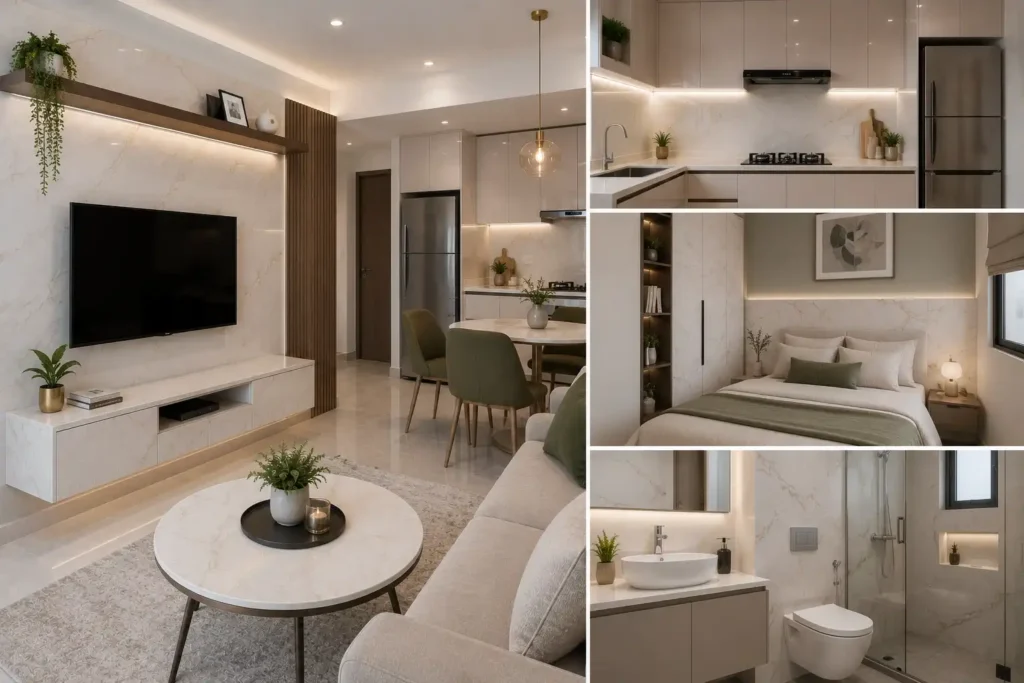
A standard solid-colour acrylic sheet has surface character and visual depth, but it does not have pattern. Marble acrylic has pattern, and pattern reads at a different scale than colour.
Three things make marble acrylic behave differently in a small room:
1. The veining draws the eye. The eye naturally flows on the pattern, which compresses the perceived space.
2. Pattern repetition can become visually overwhelming at large scale. What reads as elegant on a one-square-metre panel can read as busy on a six-square-metre wall.
3. The material creates a stronger visual presence that needs visual room to breathe. Cluttered around it, the signal compresses; given space, it amplifies.
These three differences argue for restraint in small spaces. Not less marble acrylic, but more deliberately placed marble acrylic.
A Practical Guideline for Using Marble Acrylic in Small Spaces
Here’s a practical design guideline followed by many interior designers for premium Indian apartment interiors: in smaller rooms, marble acrylic should ideally cover no more than 30% of the visible vertical surface area. This allows the material to serve as a striking focal point without overwhelming the room, with the remaining surfaces providing the visual balance that makes the room comfortable over time.
The math:
1. A typical 150-square-foot bedroom can have approximately 350 to 400 square feet of visible vertical wall and door surface, depending on ceiling height, windows, and openings.
2. Thirty percent of that is 105 to 120 square feet maximum of marble acrylic visible at any time
3. Beyond this guideline, marble acrylic is more likely to compete with the room for attention rather than enhance it.
4. Within this guideline, marble acrylic is more likely to read as a luxury accent that elevates the overall space.
This guideline is indicative, not prescriptive. Some applications deserve to go beyond it such as a thoughtfully designed statement feature while others need even less marble acrylic. But in most small residential spaces, a visible marble acrylic of about 30 percent is the best, balanced result.
The Three Right Places to Use Marble Acrylic in Small Spaces
Three application zones consistently produce the right marble acrylic moment in small Indian apartments.
Right Place 1: Kitchen Splashbacks
The kitchen splashback is one of the highest-impact, lowest-risk marble acrylic applications. The area is small (typically 15 to 25 square feet), the marble is framed by countertop and upper cabinetry, and the visual moment lands in a room where the user spends time but does not linger in repose.
The Dexarte acrylic range for kitchen splashback marble effects: Dexiglas Crystal for the deepest gloss-on-marble character, Essenczza for design-forward residential kitchens, and Engrave where the dimensional depth of the marble pattern should be read.
Right Place 2: Single Wardrobe Door as Anchor
A single wardrobe door in marble acrylic, with the rest of the wardrobe in a quieter solid or wood-grain finish, produces a statement that the eye reads as thoughtful.
The visible marble surface area in this application is usually 18 to 25 square feet, comfortably within the recommended guideline for most small rooms.
Recommended products across the Dexarte acrylic range: Essenczza for design-forward residential, Dexiglas Crystal for the deepest gloss, Engrave for dimensional marble that holds shadow.
Right Place 3: Powder Room Vanity Backdrop
The powder room is the single space in a small Indian apartment that can carry full marble acrylic without restraint. The room is small (25 to 40 square feet), used briefly (not lingered in), and viewed as a deliberate design moment by guests.
A full marble acrylic vanity backdrop, or a full feature wall behind the toilet, in a powder room works because the room itself is a design statement. This guideline is less relevant because the entire room is intentionally designed as the feature space.
Dexiglas Crystal is a strong specification here, depending on the marble character and gloss intent.
The Three Wrong Places (Where People Overdo It)
The applications we see go wrong most often in Indian apartments under 1500 square feet.
1. Full master bedroom wall facing the bed. The user views the marble for hours each morning and evening. The pattern intensity creates visual fatigue. The 30-percent rule is violated three times over.
2. Living room TV-back full wall. The living room is the home’s most-used room, viewed for extended periods. A full marble wall creates unnecessary visual competition with whatever is on screen and whatever conversation is happening.
3. Both kitchen splashback and entire kitchen cabinet front in marble acrylic. The marble loses its accent character when it covers two large adjacent surfaces. The kitchen reads as overwhelming rather than premium.
Each of these is a specification that looked compelling on the showroom floor and produced regret in the actual room. The fix is restraint at the specification stage.
Pairing Marble Acrylic with Quieter Finishes
Marble acrylic in a small space needs surrounding surfaces that let it lead. The pairing logic:
1. Quieter cabinetry around the marble feature. Solid matte acrylic, wood-grain laminate, or restrained polymer laminate on the surrounding surfaces.
2. Restrained wall treatments around the marble. Paint, plain panel finishes, or quieter acrylic in the adjacent walls.
3. Soft furnishings that support, not compete. Beds, sofas, and chairs in solid colours or quiet textures, not patterned upholstery.
4. Lighting should highlight the marble rather than compete with it. Task lighting that draws the eye to the marble moment, ambient lighting that lets the surrounding surfaces recede.
A marble acrylic moment surrounded by quieter elements reads as elegance. The same marble in a room of competing patterns reads as overwhelming.
The Dexarte Marble Acrylic Range Across Three Products
The Dexarte acrylic range covers the marble specification with four distinct products, each suited to a different application context.
1. Essenczza. Our design-forward acrylic for premium residential interiors. Marble variants suited to single-door wardrobes, kitchen splashbacks, and powder room accents in apartments.
2. Dexiglas Crystal. Our glass-like high-gloss acrylic. The deepest gloss reading of the marble pattern, suited to statement applications where the visual depth should lead.
3. Engrave. Our dimensional acrylic. The marble pattern reads with depth and shadow rather than as a flat reproduction. Suited to statement applications where the surface should register physically as well as visually.
The right pick depends on the room, the use intensity, and the design intent.
For Walls Specifically: When Altura or Iconica Replaces the Sheet
For wall applications in small spaces, a direct-to-wall panel often works better than a marble acrylic sheet, particularly for the powder room and the bedroom feature wall use cases.
1. Altura is the quieter, architectural panel. It suits walls that should support the room as designed architecture without dominating. A small bedroom backdrop, a hallway feature, a quiet powder room.
2. Iconica is the statement panel. It suits walls that should be the room’s design moment. A powder room features a wall, a small dressing area, and an entry-vestibule statement.
For walls where the application calls for the panel rather than the sheet, these are the two products to consider.
Five Mistakes Indian Homeowners Make with Marble Acrylic
1. Treating the showroom sample as the application brief. The sample is one square metre. The application is twelve square metres. The intensity scales non-linearly.
2. Ignoring the room’s actual viewing time. A surface viewed for hours each day behaves differently from a surface viewed for minutes. can create visual fatigue over time if overused; in short-view applications, it amplifies.
3. Pairing marble acrylic with patterned soft furnishings. Pattern-on-pattern compresses small rooms. Solid or textured-quiet soft furnishings let the marble lead.
4. Specifying marble acrylic on a wall when a direct-to-wall panel was the right product. Altura or Iconica often deliver the moment the marble was trying to deliver, with simpler installation.
5. Going to full-wall marble acrylic in any room used for repose. The bedroom and the long-session living room are not the rooms for full-wall marble. The kitchen splashback and the powder room are.
Each is preventable in the specification stage. None is cheap to live with for the next decade.
The Specification Checklist
Here are the things to ensure before making any marble acrylic sheet specification for a small Indian apartment:
1. Room area measured; vertical surface area calculated
2. Marble visible area calculated against the 30-percent rule
3. Application zone confirmed (kitchen splashback, single wardrobe door, powder room, accent only)
4. Use pattern confirmed (long-view repose room versus short-view destination room)
5. Surrounding finishes specified to support, not compete
6. Lighting plan developed to frame the marble moment
7. Review the sample under the room’s actual lighting conditions
8. Wall application checked against the panel option
Final Thoughts
Marble acrylic sheets in small Indian apartments deliver luxury, depth, and a clear premium signal when used with restraint. Following the 30% guideline, choosing the right application zones, and pairing marble acrylic with quieter surrounding finishes creates interiors that feel intentional, balanced, and timeless.
Need Help Picking The Right Finish?
Each space has a function, and the right finish can completely change the look, feel and performance of that space over time. When designing a kitchen, wardrobe or feature wall, the best choice is to match the finish to the space, not just follow trends.
Contact Dexarte for expert advice, design inspiration and finish recommendations to help you create the right mood, function and visual harmony on every surface.
Follow Dexarte on Instagram, Facebook, and LinkedIn for inspiration and surface innovations.